
Create shortened links, generate QR codes, and track analytics with EdgeURL.
Everyone keeps calling EdgeURL a link-in-bio tool. It's an easy shortcut, and the bio page is real -- but it's also the narrowest way to describe what we've built. The category is wrong.
Here's what we actually are, and why the distinction matters for creators trying to build durable audiences in 2026.
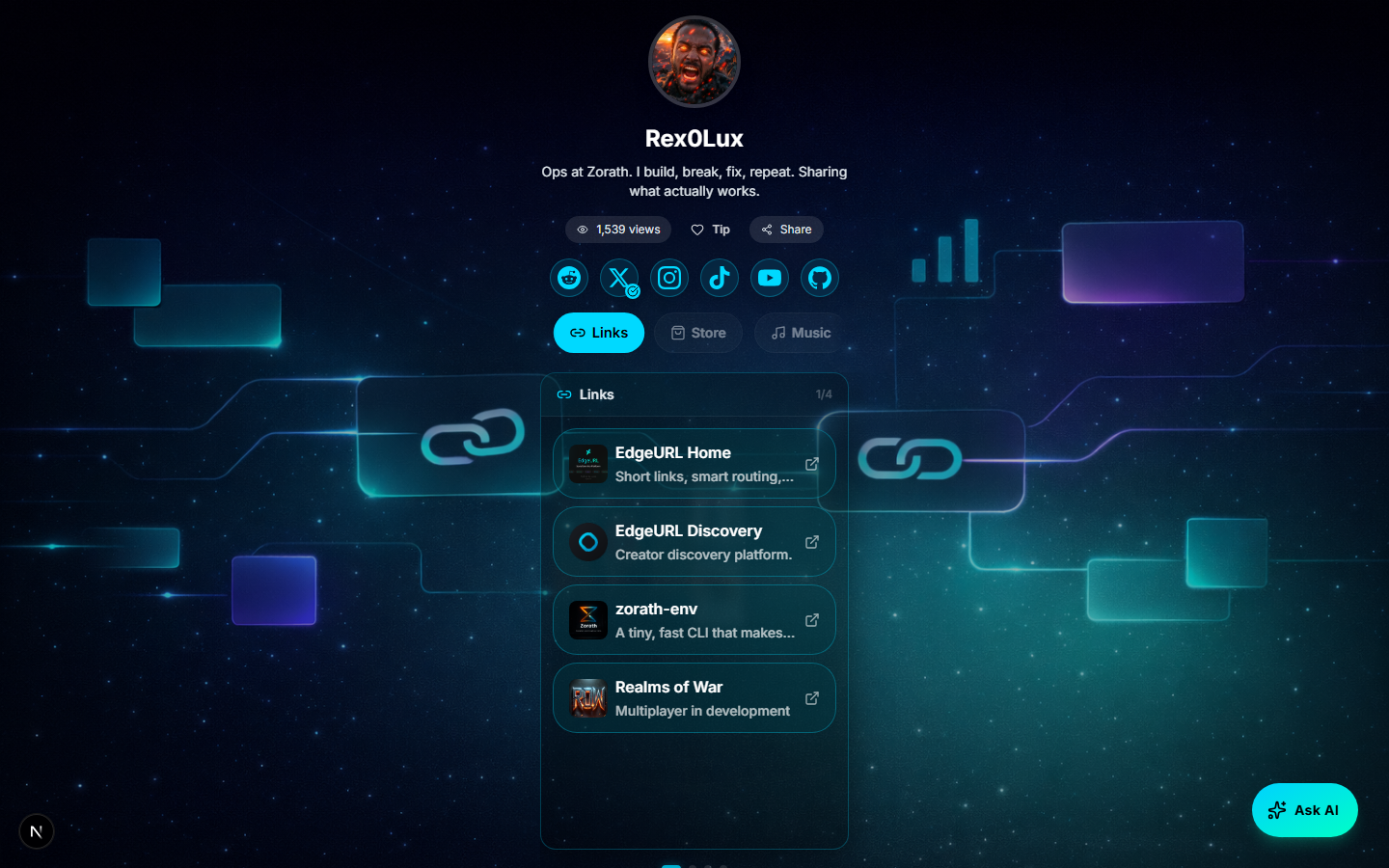
Link-in-bio, as a category, was born around one jobs-to-be-done: I need to put multiple links on one page so I can share it from platforms that only allow one. That's it. Linktree nailed that job in 2016. Everyone else is playing features-arms-race on the same primitive.
Here are the three thresholds a pure link-in-bio tool doesn't cross:
1. It's not an identity -- it's a page. A link-in-bio is rendered once, shared once, clicked through. There's no continuity. If someone sees your bio today and your TikTok six months later, the tool doesn't know those are the same person. Your identity stays fragmented across whichever platforms you're on.
2. It's not discoverable -- it's hidden. The whole bio page architecture assumes someone already has your link. Nobody stumbles onto a Linktree. The discovery layer lives outside the product -- on Instagram, on TikTok, on Google -- and the bio page is a terminal destination. It doesn't route audience back to you.
3. It's not programmable -- it's static. Every competitor ships a REST API eventually, but it's for managing your own links. Nothing in the category treats AI agents or automated tools as first-class citizens of the user's identity. The tools can't read your bio, can't update it for you, can't pay for your upgrades. They sit outside the system looking in.
Those three gaps are the reason we stopped calling EdgeURL a link-in-bio tool. What we're building has a different shape.
Category name: Social Identity Platform. Three things it has to do that a link-in-bio can't:
Your bio page is one surface. Your short links are another. Your Verified socials are a third. Your Store, your Hire Me inquiries, your Discover profile -- all of them touch the same underlying entity: you.
On EdgeURL, every one of those surfaces reads from the same identity record. Your short links keep their own analytics. Your bio page keeps its own. A brand finding you through Discover sees your verified socials. An AI agent creating a link for you writes to the same row a human would. Different surfaces, same identity -- all wired together.
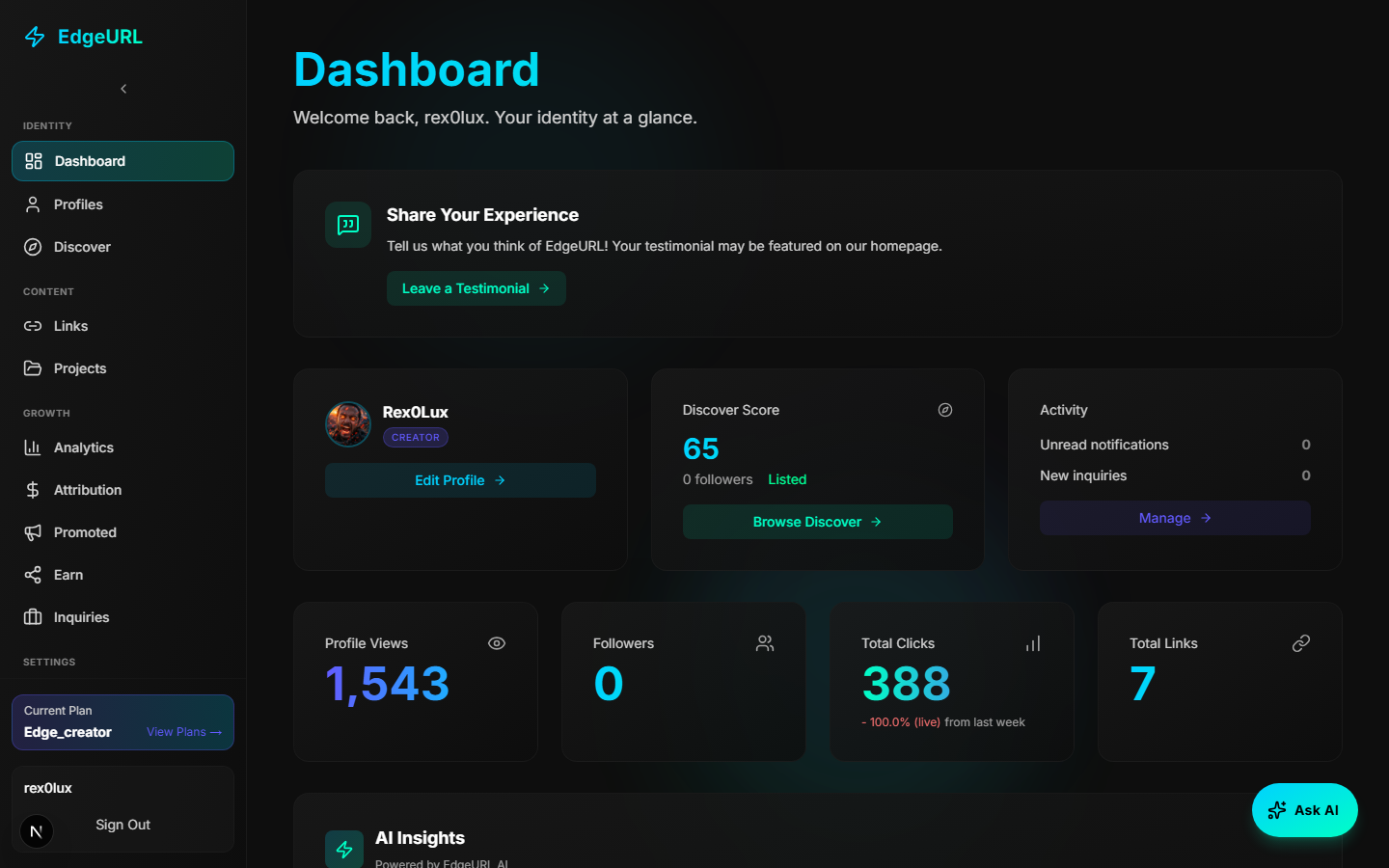
The dashboard is the command center for that graph. It's not a link manager with a bio tab bolted on -- it's an identity-first view where links, profiles, analytics, and monetization all route back to the same person.
Being reachable at a URL is not the same as being discoverable. Link-in-bio tools optimize for the first. EdgeURL optimizes for the second.
Discover is a creator directory indexed by category, verification status, engagement, and industry. Your bio page gets listed. Brands searching for creators in specific niches see you. Freelancers searching for clients get surfaced. Traffic flows into the identity graph, not just through it.
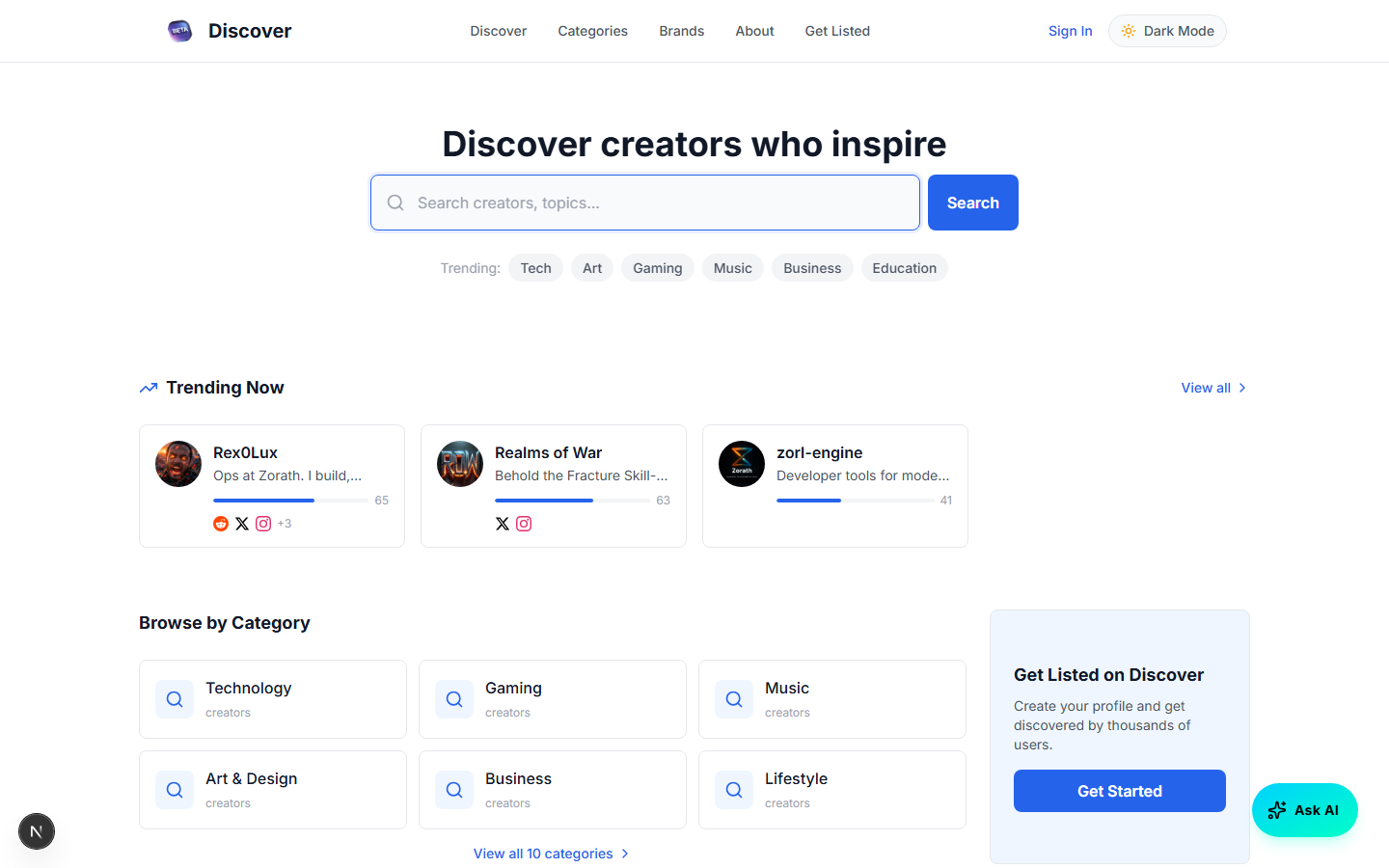
That's the job a link-in-bio can't do. You can have the most beautiful bio page in the world, but if nobody finds it, it's a poster on a wall in a locked room.
Here's the one that matters most for where the internet is going.
There are two ways to be "AI-native." The first is the one most people mean: the product is a chat. Perplexity, Claude, ChatGPT, Cursor. You type a query, the AI responds, the product is a conversation. That's AI-native UX.
The second is less visible but more durable: AI agents are first-class customers of the product, alongside humans. That's AI-native infrastructure. It's what Stripe did when they built agent-checkout. It's what Anthropic did with MCP. And it's what EdgeURL does for creator identity.
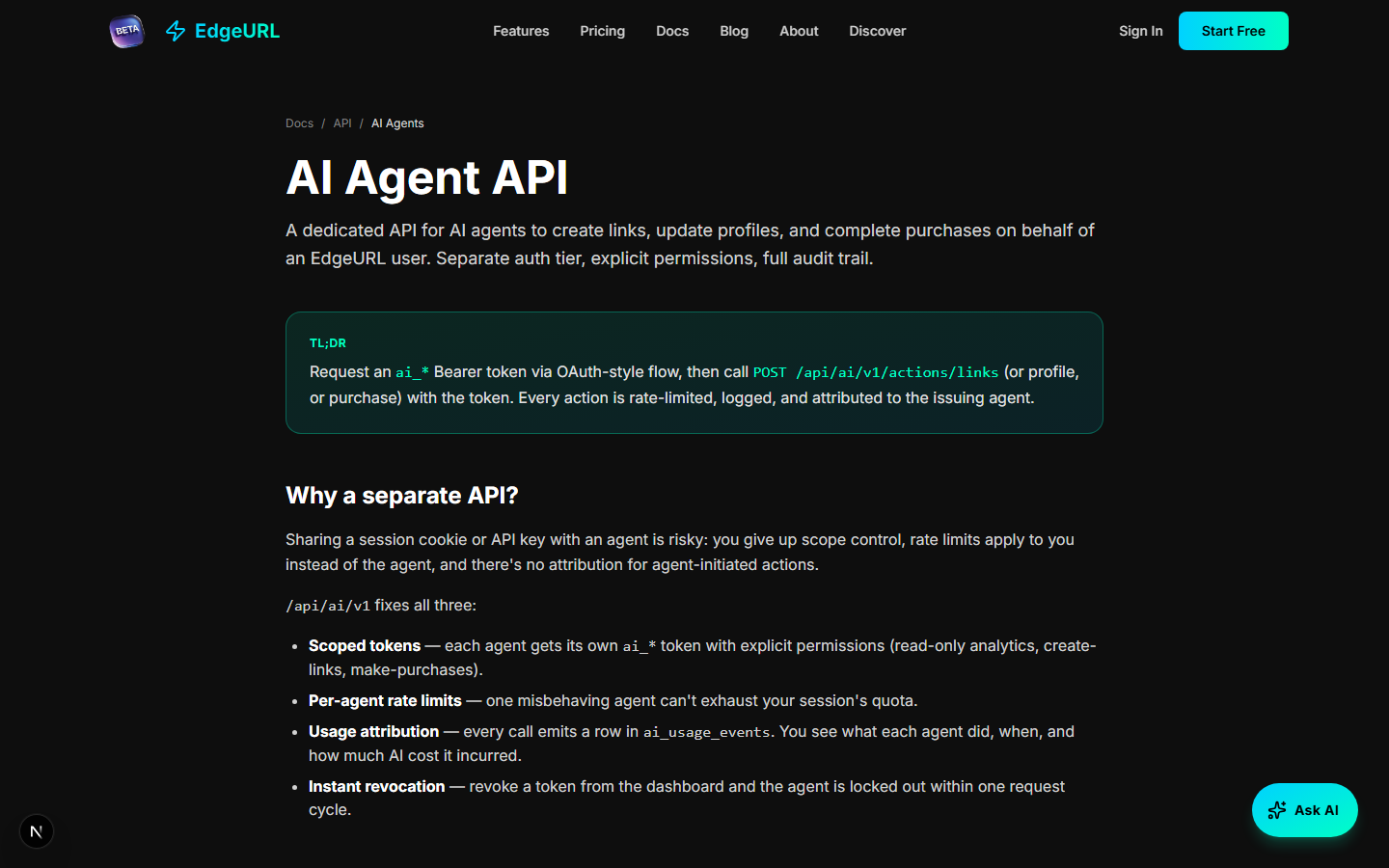
Every EdgeURL user can grant a scoped ai_* Bearer token to an AI agent. That token has its own rate limits, its own audit trail, its own revocation surface. The agent can create links on your behalf, update your bio, make purchases within limits you pre-authorized, even sign you up for new plans. You never share your password. You never hand over an OAuth token to a chat product. The agent is a separate entity that acts inside your identity with explicit, revocable scopes.
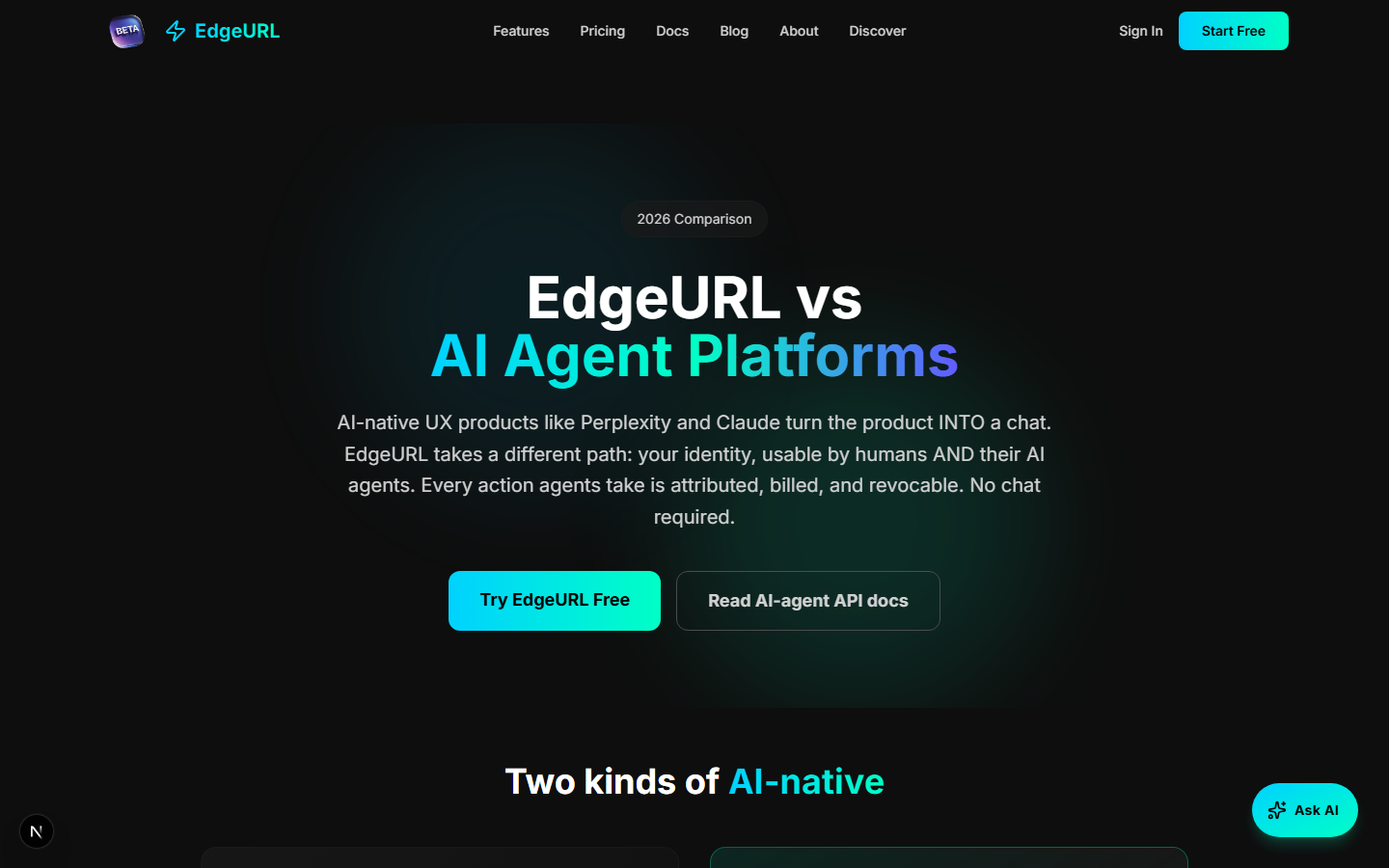
No other platform in this category has that. Linktree doesn't. Bitly doesn't. Beacons and Stan don't either. And the AI-chat products (Perplexity, Claude, ChatGPT) don't have the identity-and-commerce rails that make agent-actions worth doing in the first place. We're in a different category than both.
If you're trying to decide whether EdgeURL fits your use case, here's the simple test: do you want a page or do you want an identity?
You want a page if your goal is "put some links somewhere and share it." Linktree is still great for that. You don't need the graph, the discovery layer, or the agent API.
You want an identity if your goal is longer: build an audience, get discovered, monetize without the middleman fee, and have the option to let AI agents work on your behalf as that stack grows. That's what EdgeURL is built for.
We're not saying link-in-bio is going away. We're saying it's a feature of something bigger, and that bigger thing is what needs a name. We're calling it a Social Identity Platform because that's what it actually is: a platform for owning, routing, and monetizing your public internet presence, usable by both you and the agents working for you.
This category is early. The positioning here isn't retrospective marketing -- it's the frame that drove decisions like building a dedicated AI-agent auth tier, adding attribution to every agent call, and treating Discover as a first-class surface instead of a feature on the bio page.
If you're building an audience, a brand, or a creator business in 2026 and the link-in-bio frame feels too small, this is why we exist. Create a free account and let us know what breaks first. We ship fast.